LifeSafer’s Intelligent Speed Assistance system can shut down a stolen police vehicle so that it can be recovered without a high-speed pursuit.
by Staff
August 28, 2025
Credit:
LifeSafer
3 min to read
It happens several times a year. An officer is dealing with a drunk at a traffic stop or making an arrest for a usually minor crime, and the suspect jumps in the officer’s running patrol vehicle and takes off.
Patrol vehicle theft is extremely dangerous. Officers, suspects, and the general public can be injured or even killed when a suspect drives away from an arrest in a police vehicle. What usually happens in these incidents is that officers pursue until the suspect decides to stop the car and give up, crashes, or after tire deflation devices or a PIT maneuver make it impossible for them to keep driving.
Ad Loading...
Michael Travars, president of LifeSafer, believes his company’s Intelligent Speed Assistance (ISA) product could help police recover stolen emergency vehicles without pursuits, PIT maneuvers, or other hazardous actions. It can also prevent officers from driving faster than policy permits during patrol or other operations.
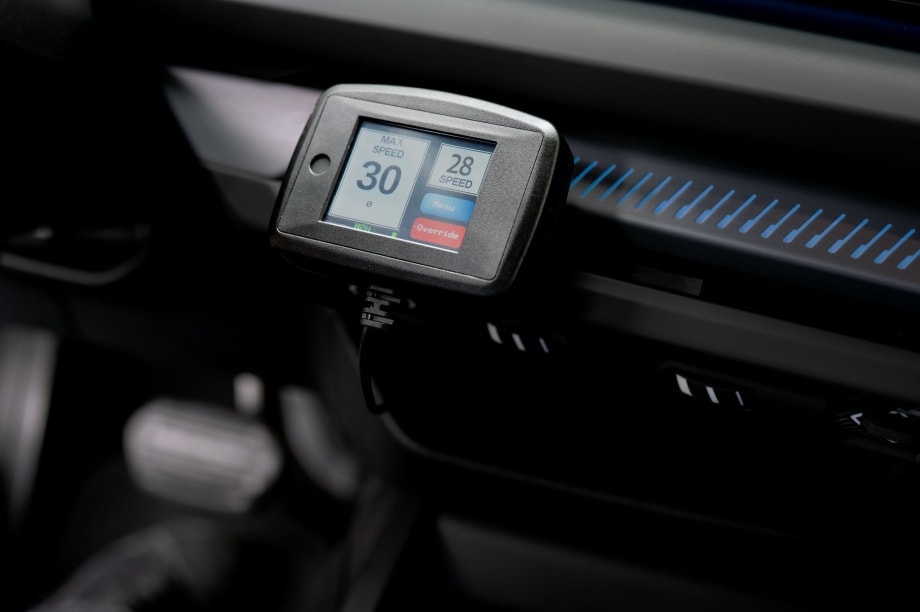
LifeSafer is one of the companies that produces and sells ISA devices, which can govern the top speed of a vehicle or reduce its top speed on command. The device interfaces with the accelerator and can be remotely controlled by authorized users like patrol supervisors, commanders, dispatch, or other authorized personnel. It can immediately reduce the top speed of a vehicle to dead stop or it can gradually slow a vehicle.
“You can remotely lower the top speed,” Travars says. “You can just set it to 5 MPH, or you can do what we call a ‘latch and lock,’ which allows you to cut the speed by 10 miles per hour, every few seconds, so that the vehicle’s speed is gradually reduced.”
In addition to remote operation that allows authorized personnel to reduce the speed, the system allows agencies to geofence vehicles. Using the geofencing feature, agencies can set up ISA so that if the vehicle leaves its patrol area without authorization, it can be shut down via speed controls. Authorized personnel can also use the ISA website to monitor vehicles equipped with the system. The website shows each vehicle’s location and speed.
“The technology is easy to install,” says Travars. “It connects to the accelerator, which allows it to intercept and determine speed. If you look behind a gas pedal, there’s a cord that runs from the pedal into the car and that cord has a connector on it. So what we do is we disconnect that connector, put our cord between those two things. It’s nearly seamless.”
Ad Loading...
LifeSafer Intelligent Speed Assistance system installed in a vehicle.
Credit:
LifeSafer
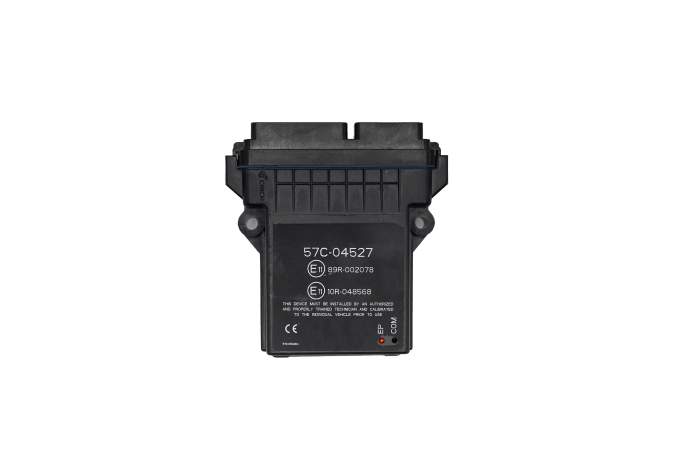
There are three other pieces to the ISA hardware. “It has a core bit of technology for calculations, GPS for location, and a cellular module that communicates back to headquarters,” Travars explains.
Travars adds that because it’s an aftermarket product, ISA is designed to work with nearly any make or model of vehicle. That flexibility also makes it compatible with both new and older vehicles, and it can be transferred from one vehicle to another without any need for modifications.
ISA is not a new product. It’s been used by commercial fleets and other professions for years. But Travars, who is the son of a law enforcement officer, recently realized that he wanted to market it to public safety to make emergency vehicle operation safer.
Travars says one of the first law enforcement agencies that expressed interest in ISA was the London Metropolitan Police. “We passed a London trial and a New York trial with flying colors,” Travars says.
ISA has been installed in emergency vehicles throughout London. “The ambulances are a big success story,” Travars says. “Using ISA, the ambulances can get people to the hospital on time when they need to. But when they are just driving around, there’s no need to be tearing through a neighborhood.”
Johann Jooste brings more than two decades of experience designing scalable platforms for law enforcement and emergency services to his new role as chief technology officer at Versaterm.
AI gun detection company ZeroEyes has doubled its partner channel and expanded its operations center to meet growing demand, plus has surpassed 1,000 verified alerts of confirmed gun detections.
Pryme, a manufacturer of top-grade communication accessories for two-way radios and PoC applications, has partnered with Tango Tango, a mobile application that connects smartphones to existing two-way radio systems.
A new integration partnership will enable Flock Safety hotlist alerts and license plate recognition (LPR) searches directly in Coreforce’s Real-Time Crime Center (RTCC) and Digital Evidence Management System (DEMS) platform.
Learn about DroneSense by Versaterm as POLICE talks with Ryan Bracken, head of product. He explains the rapid advancements in drone technology, capabilities, and software.
Learn more about Versaterm as POLICE visits with Rohan Galloway-Dawkins, chief product officer, to explore the company’s focus on a purpose-built platform for public safety.
In this video, learn about the Motorola Solutions ecosystem and how it provides tools that enhance the efficiency and safety of police officers. You’ll hear about the APX NEXT radio and SVX system, Assisted Narrative, and more.
Watch this tutorial on how fleet management platforms work. You’ll see how easily you can integrate fleet telematics, dash cameras, and asset management in a single pane of glass and manage your fleet more effectively.
Learn about the latest ruggedized routers designed for public safety vehicles as POLICE visits with Greg Hill of Semtech. These routers are equipped with the latest 5G technology.